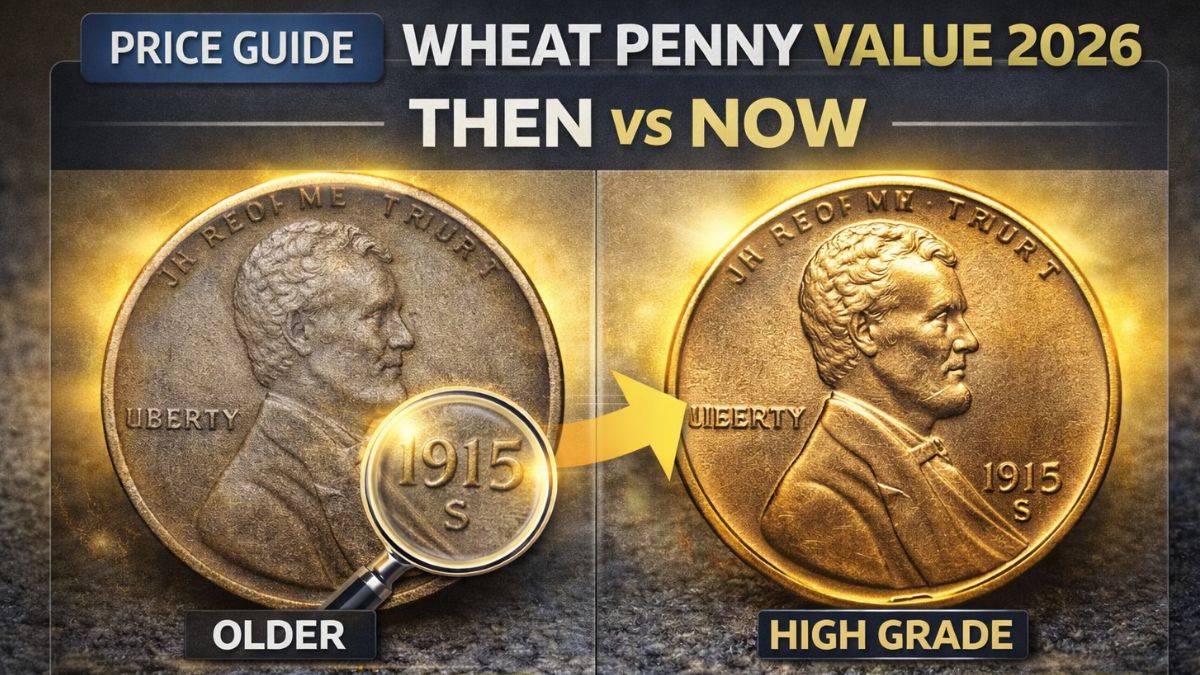
The Wheat Penny, also called the Lincoln Wheat Cent, is one of the most recognized coins ever made in the United States. It was produced from 1909 to 1958 and shows Abraham Lincoln on the front and two wheat stalks on the back. For many years, these coins were used in daily shopping and banking. People carried them in pockets and jars without much thought. Over time, however, collectors began to realize that some of these pennies were special. Today, many Wheat Pennies are collected for their history and, in some cases, their high market value. What was once just a one-cent coin can now be worth far more depending on its year, mint mark, and condition.
How the Wheat Penny Began
The Wheat Penny was first released in 1909 to celebrate the 100th birthday of Abraham Lincoln. It was the first regular U.S. coin to show a real person instead of a symbolic figure. The design was created by Victor David Brenner. His initials appeared on some early coins, which later became part of an important collectible variety. The coin remained in production for nearly fifty years. In 1959, the design changed to show the Lincoln Memorial on the reverse side, ending the Wheat Penny era. Because of its long run and historic theme, the coin became a favorite starting point for many coin collectors.
What Wheat Pennies Were Worth in the Past
When Wheat Pennies were first issued, they were worth exactly one cent and were treated like any other small change. People did not separate them or save them unless they were brand new. During the mid-1900s, coin collecting grew in popularity. Hobby guides and coin albums encouraged people to look at dates and mint marks more closely. Even then, most Wheat Pennies were only worth a few cents each unless they were in perfect shape or came from a rare batch. Children often built small collections from pocket change. At that time, the idea that some of these coins would later sell for hundreds or thousands of dollars seemed unlikely to most people.
Also Read:
 IRS Confirms February Refund Date: What It Means for Taxpayers and When Payments May Arrive
How Wheat Penny Values Have Changed Today
By 2026, the value picture has changed a lot. While many common Wheat Pennies are still inexpensive, collector demand has pushed prices higher for better-quality and rare examples. Coins that are worn and heavily circulated may sell for only a small premium above face value. But coins that are sharp, clean, and well preserved can be worth much more. Professional grading services now rate coins by condition, and even a small difference in grade can change the price significantly. Online auctions and coin marketplaces have also made it easier for buyers and sellers to connect, which has helped establish clearer market prices.
Rare Dates and Special Varieties That Bring Higher Prices
Some Wheat Pennies are famous because they were made in small numbers or have unusual features. The 1909-S VDB is widely known because it had a low production and shows the designer’s initials clearly. The 1914-D is another key date that collectors often search for because fewer were made and many were lost in circulation. The 1922 No D variety is unusual because the mint mark is missing due to worn dies, making it stand out from normal coins of that year. The 1931-S had a low mintage during the Great Depression and is also harder to find. One of the most talked-about error coins is the 1955 Double Die, where the front lettering appears doubled and can be seen without magnification. These coins often sell for large amounts when verified and graded.
What Factors Decide a Wheat Penny’s Value
Several elements work together to determine how much a Wheat Penny is worth. Rarity is one of the biggest drivers. Coins with low mintages or known production problems usually attract strong interest. Condition is just as important. A coin with clear details, original color, and little wear will almost always be more valuable than one that is scratched or faded. Authenticity also matters because counterfeit rare pennies do exist. Verified coins graded by trusted services usually sell at stronger prices. Market demand plays a role too. When more collectors want a specific date or variety, prices can rise.
Also Read:
 IRS Tax Refund Deposit Schedule 2026: Check Amount & Estimated Dates for Refund Payments in the USA
The Importance of Condition and Proper Care
Coin condition is not just about appearance. It directly affects value. Collectors use grading scales that range from heavily worn to perfect mint state. A small improvement in grade can mean a large jump in price. Because of this, proper storage is very important. Coins should be kept in holders, flips, or albums made for coin preservation. Exposure to moisture, heat, or rough handling can damage surfaces. Cleaning coins is usually a mistake because it can lower their value instead of raising it. Natural surfaces are preferred by collectors and dealers.
Why Wheat Pennies Are Culturally Significant
Wheat Pennies are more than just collectibles. They are small pieces of American history. These coins were used during major world events, including both World Wars and the Great Depression. They passed through millions of hands and daily transactions. Many collectors enjoy them because they connect the present with the past in a simple and physical way. Holding one can feel like holding a tiny historical artifact. This cultural link is one reason interest has remained steady across generations.
Then Versus Now: A One-Cent Coin With a Bigger Story
In earlier decades, Wheat Pennies were treated as ordinary money. Few people expected them to become valuable collectibles. Today, they are studied, graded, and traded around the world. The difference between then and now shows how collectibles can gain importance over time. A coin once used to buy a small item may now be worth far more than its face value. This change also highlights the benefit of careful saving and preservation. Not every Wheat Penny is rare, but the possibility that one could be special keeps collectors searching.
Also Read:
 $2,000 Direct Deposit February 2026: Truth, Eligibility Talk, Payment Dates & Real Guidelines
Final Thoughts on Wheat Penny Collecting in 2026
Wheat Pennies continue to attract new and experienced collectors in 2026. Their long history, classic design, and range of values make them appealing to many people. Some are affordable entry-level collectibles, while others are serious investment pieces. Learning about dates, mint marks, and condition can greatly improve buying and selling decisions. With patience and knowledge, collectors can build meaningful collections from these historic coins.
Disclaimer
This article is for general educational and informational purposes only. Coin values change based on market demand, condition, grading, and authenticity. Prices mentioned or implied are not guarantees. Always consult a qualified coin dealer or professional grading service before buying, selling, or investing in collectible coins.