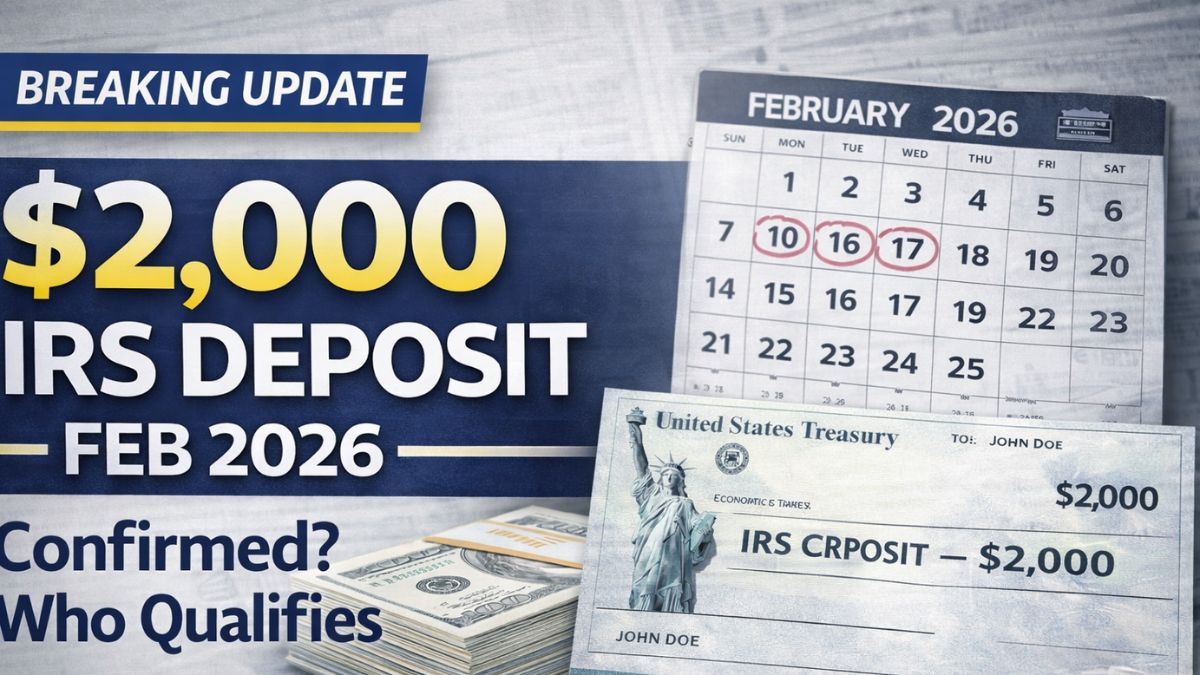
News and social media discussions about a possible $2,000 IRS direct deposit for February 2026 have created a lot of excitement and confusion. Many families are hoping that a new relief payment may arrive to help with rising living costs. At the same time, there are many misleading posts that present this payment as already approved. The real situation is different. As of now, there is no officially approved $2,000 IRS payment scheduled for February 2026. It is only a proposal connected to broader economic and political discussions.
Understanding what is confirmed and what is still under discussion is very important. It helps people avoid false expectations and protects them from scams and misinformation.
Why People Are Talking About a $2000 IRS Payment
The idea of a $2,000 direct deposit comes from recent public discussions about possible tariff dividend payments. Some leaders have spoken about the idea of returning a portion of government tariff collections back to taxpayers in the form of relief payments. Because earlier stimulus checks were also sent directly to bank accounts, many online sources started calling this possible payment another stimulus-style deposit.

However, public discussion does not mean legal approval. A proposal or statement does not automatically become a government payment program. For any such payment to become real, it must go through the full lawmaking process. Right now, that has not happened.
Current Approval Status of the February 2026 Payment
At present, there is no law passed that authorizes a $2,000 IRS direct deposit for February 2026. No official payment order has been issued. No signed legislation exists for this benefit. That means there is no confirmed payment date, no finalized eligibility rule, and no official IRS distribution plan.
Some websites present estimated timelines and guaranteed amounts, but these claims are not based on official approval. Until Congress passes a bill and it is signed into law, the payment remains only a possibility. People should treat all specific dates and amounts being shared online as speculative.

How Such a Payment Would Likely Be Sent If Approved
If a $2,000 relief payment were approved in the future, it would most likely follow the pattern used in earlier federal relief programs. The IRS would probably use recent tax return records to identify eligible recipients. Direct deposit would likely be the fastest method, using bank details already on file with tax returns. Those without bank details on record would likely receive paper checks or prepaid debit cards by mail.
The final payment amount might not be the same for everyone. In past programs, payment totals changed depending on filing status and number of dependents. Married couples and families with qualifying children sometimes received higher combined amounts. Similar rules could apply if any new program is created, but nothing is finalized yet.
Possible Eligibility Rules Based on Past Relief Programs
Even though no official rules exist yet, people often ask who might qualify if such a payment is approved. Looking at past federal relief efforts gives a general idea, though it is not a guarantee. Eligibility would likely depend on legal residency status, valid Social Security numbers, and tax filing records.

Income limits would probably be included. Previous relief checks reduced or phased out payments for higher income earners. Dependents claimed on another person’s tax return might not qualify for a separate payment on their own. Age requirements could also apply. Still, these are only educated expectations based on earlier programs, not confirmed rules.
What People Should Do Right Now
Since there is no approved program at this time, there is no application form to fill out and no registration process to complete. Anyone claiming they can help you “apply now” for the $2,000 payment is not providing accurate information.
The best practical step people can take is to keep their tax records updated. Filing tax returns on time and making sure the IRS has current address and bank account information can help avoid delays if any future payment is approved. Following only official government announcements is also important. Verified updates will come from official agency websites and formal press releases, not random social media posts.

Government Updates and Official Communication
So far, officials have acknowledged that ideas about taxpayer relief connected to tariff collections have been discussed, but no final structure, amount, or schedule has been approved. Government agencies have not released payment calendars or eligibility charts for any February 2026 deposit.
When and if a program becomes law, the details will be clearly published through official channels. These will include eligibility rules, payment methods, and timelines. Until that happens, everything remains in the discussion stage.
Risk of Scams and False Claims
Whenever rumors of government payments spread, scam attempts usually increase. Fraudsters often send messages claiming that a payment is ready and asking people to click links or share personal and banking details. Some may pretend to be government representatives and promise to speed up or unlock a payment.
Also Read:
 New Trump Tax Breaks Come With Conditions: What Taxpayers Should Know Before Claiming Them
People should be careful with such messages. Government agencies do not ask for sensitive personal information through unexpected emails, texts, or phone calls. There is no fee required to receive a legitimate federal payment. Any message that asks for payment or personal data in exchange for releasing funds should be treated as suspicious.
What to Expect in the Coming Months
It is possible that discussions about taxpayer relief will continue, but approval is not guaranteed. Economic proposals often change during the legislative process or may not pass at all. Households should avoid planning their budgets around unapproved payments.
If lawmakers approve a relief deposit in the future, the rules will be clearly defined and widely announced. Until then, it is wise to rely only on confirmed income and verified benefits when making financial decisions.

Final Understanding
The proposed $2,000 IRS direct deposit for February 2026 has gained attention, but it is not officially approved. It remains a proposal linked to broader economic ideas and political discussion. There is no confirmed payment schedule, eligibility list, or distribution plan at this time. Staying informed through official sources and keeping tax information updated is the safest approach. Facts should guide financial planning, not rumors.
Disclaimer
This article is for informational purposes only. The $2,000 IRS direct deposit mentioned here is not officially approved or confirmed. Payment amounts, eligibility conditions, and timelines may change or may never be implemented. Readers should depend only on official government and IRS sources for verified updates and instructions.