
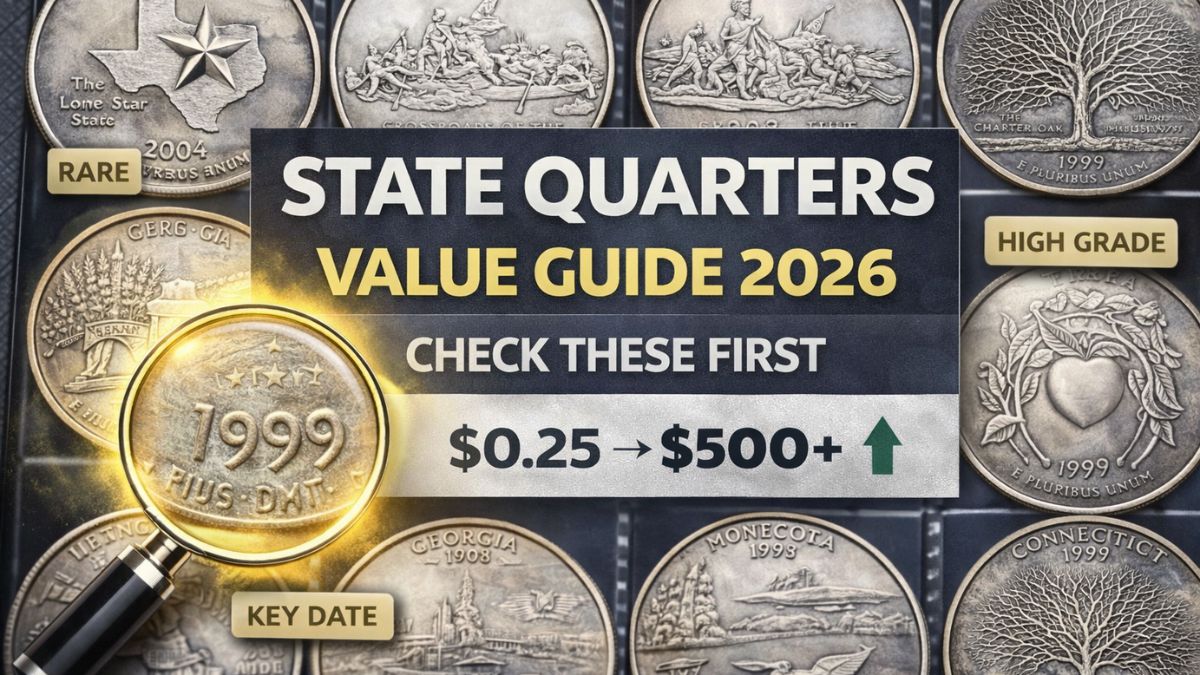
The State Quarters program is one of the most successful coin programs ever released in the United States. It began in 1999 and continued through 2008, with each state receiving its own special quarter design. These coins were created to celebrate state history, culture, and symbols. Millions of people collected them from pocket change, coin rolls, and bank visits. Even though the program officially ended years ago, interest in state quarters is still strong in 2026. Most of these quarters are still worth only twenty-five cents, but some rare examples and error coins can sell for much higher prices. Understanding what makes certain state quarters valuable can help collectors and casual savers recognize hidden treasures.
How the State Quarter Series Was Designed and Released
The program followed a clear release order based on when each state joined the Union. New quarter designs were issued several times each year. The front side of every coin kept the familiar portrait of George Washington, while the back side changed to show each state’s theme. These coins were produced mainly at the Philadelphia and Denver mints, and proof versions were also made for collectors. Because production numbers were very large, most state quarters are common today. However, differences in strike quality, preservation, and minting mistakes created small groups of coins that stand out from the rest.
Why Most State Quarters Are Only Worth Face Value
In everyday circulation, state quarters were heavily used in shopping, vending machines, and banking. This heavy use caused wear and reduced the condition of many coins. Since large quantities were produced, supply remains high. When supply is high and rarity is low, prices usually stay near face value. That is why most circulated state quarters in 2026 are still worth just twenty-five cents. Many collectors still enjoy completing full sets for fun and historical interest, even when the coins are not highly valuable. The educational and hobby value remains strong even when the market value is modest.
Also Read:
 IRS Confirms February Refund Date: What It Means for Taxpayers and When Payments May Arrive
What Makes Certain State Quarters More Valuable
A small number of state quarters become more valuable because of three main factors: condition, rarity, and mint errors. Condition refers to how well the coin has been preserved. A coin that shows no wear, has full shine, and sharp details is more desirable than one that looks dull and worn. Rarity can come from lower survival numbers in top condition rather than low original mintage. Mint errors happen when something goes wrong during production. When these errors are clear and dramatic, collectors often pay a premium. The combination of high grade and a visible error can turn an ordinary quarter into a sought-after collectible.
Famous Varieties That Drew Collector Attention
Some state quarters became well known because of small but important design differences. One of the most talked-about examples comes from a Midwest state design that shows corn on the reverse. A limited number of those coins display an extra leaf detail caused by a die variation. Two versions of this extra leaf were discovered, and both attracted strong collector interest. These coins gained attention quickly and are still searched for today. Not every example sells for a huge price, but high-grade certified pieces can reach impressive values compared to normal quarters.
Early releases in the series also attracted attention from specialists who studied die polish lines, strike strength, and unusual surface traits. While many of these differences are minor, advanced collectors sometimes pay more for clearly documented varieties in top condition.
Also Read:
 IRS Tax Refund Deposit Schedule 2026: Check Amount & Estimated Dates for Refund Payments in the USA
The Importance of Mint Error State Quarters
Mint error coins form a special area of coin collecting. Errors happen when the blank coin is not positioned correctly, when the die has a problem, or when the striking process goes wrong. With state quarters, known errors include off-center strikes where part of the design is missing, clipped planchets where a section of the coin edge is cut away, and doubled designs where letters or numbers appear repeated. The stronger and more visible the mistake, the more collector interest it usually gets. Minor errors may add only a small premium, but major visual errors can push values into the hundreds of dollars.
How Professional Grading Affects Market Prices
Coin grading services play a major role in today’s coin market. These companies examine coins, rate their condition on a numeric scale, and seal them in protective holders. This process gives buyers more confidence because the coin’s quality has been judged by experts. For state quarters, grading matters most at the high end of the condition scale. A nearly perfect coin can be worth many times more than a slightly lower grade of the same design. When a rare variety or error quarter is also graded at a very high level, its price can increase sharply. Certification also helps prevent disputes about authenticity and condition.
Realistic Value Ranges for State Quarters in 2026
State quarter values in 2026 fall into broad levels. Circulated coins with no special features are usually worth face value. Bright uncirculated coins taken from rolls or mint sets can sell for small premiums, often a few dollars depending on eye appeal. Professionally graded coins at very high levels can move into higher price ranges, especially from earlier program years. The top tier includes rare varieties, major mint errors, and exceptional graded examples. These are the coins that can reach several hundred dollars or more in the right market. Such coins are the exception, not the rule, but they keep collector interest alive.
Also Read:
 $2,000 Direct Deposit February 2026: Truth, Eligibility Talk, Payment Dates & Real Guidelines
How Collectors Search for Valuable Examples
Many collectors still search for better state quarters through roll hunting, which means examining bank-wrapped rolls coin by coin. Others look through old jars and saved change. Careful viewing under good light helps spot unusual features. Magnification tools can reveal doubling or small design differences. Coin shows, dealer shops, and online marketplaces also provide chances to find higher-grade or certified examples. Learning to recognize normal wear versus unusual traits is an important skill that improves with experience.
State Quarters as a Hobby and Long-Term Collectible
For most people, state quarter collecting is more about enjoyment than investment. The series is complete, easy to understand, and strongly tied to American history and geography. It attracts beginners because coins are affordable and recognizable. Advanced collectors enjoy searching for varieties and top-grade examples. While some coins have increased in value, prices can rise and fall with market interest. A balanced approach is to collect for interest first and treat any future value growth as a bonus.
Conclusion: Small Coins With Big Collecting Interest
The State Quarters series continues to hold attention well after its release period ended. Most coins remain simple pocket change, but a small number stand out because of condition, rarity, or mint mistakes. These special pieces show how even modern coins can become collectible. With knowledge, patience, and careful inspection, collectors can better understand which quarters are common and which might deserve a closer look. The series remains a popular gateway into the wider world of coin collecting.

Disclaimer
This article is provided for general educational information only. Coin values change over time based on market demand, grading results, and authenticity. No value mentioned or implied should be treated as a guaranteed price. Always consult a qualified coin dealer or professional grading service before buying, selling, or investing in collectible coins.

