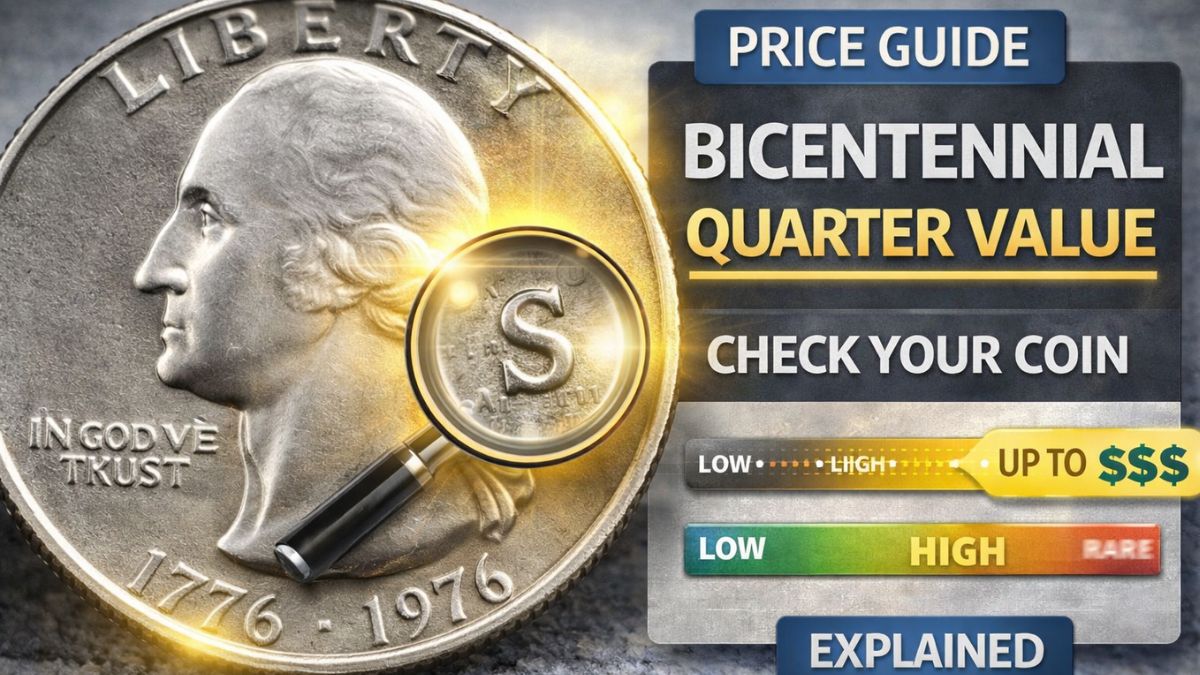
Bicentennial quarters are among the most recognizable coins in United States history. They were created to celebrate the 200th anniversary of American independence and were released with a special design that makes them different from regular Washington quarters. Many people still find these coins in old jars, collections, or even pocket change and wonder if they are worth more than twenty-five cents. The truth is that most of them are common, but some special versions can carry higher value depending on their type, condition, and rarity. Understanding a few basic details can help you judge what your Bicentennial quarter might be worth today.
Why Bicentennial Quarters Were Created
The Bicentennial quarter was issued as part of a national celebration marking 200 years since 1776. Instead of using the normal reverse design, the U.S. Mint introduced a one-time commemorative look. These coins were produced during 1975 and 1976, but all of them show the dual date “1776–1976.” No quarters were dated 1975 for circulation, which often surprises new collectors. The goal was to create a coin that honored history while still being widely available to the public. Because of this, production numbers were very large, which is one reason most examples are not rare today.
The Special Design That Sets Them Apart
The reverse side of the Bicentennial quarter shows a colonial drummer with a torch and a circle of thirteen stars. This design represents the original colonies and the spirit of independence. The front keeps the familiar portrait of George Washington but includes the dual anniversary date. This combination makes the coin easy to identify even for beginners. The design change was temporary, which adds to its collectible appeal. Many people keep these coins simply because they look different and connect to a historic moment.

Common Circulation Coins and Their Usual Value
Most Bicentennial quarters were made with a copper-nickel composition and released into everyday circulation. Because hundreds of millions were struck, these coins are still easy to find. In worn or average circulated condition, they are normally worth only face value. Even in nicer circulated shape, the price increase is usually small. Uncirculated coins that were never used in daily transactions can sell for a modest premium, especially if they still have strong shine and sharp details. However, the majority of circulation strikes are collected more for interest than for high profit.
Silver Bicentennial Quarters and Why They Matter
Not all Bicentennial quarters were made the same way. The Mint also produced special 40 percent silver versions for collectors. These were sold in special sets and were not meant for general circulation. Silver coins have a slightly different color and edge appearance compared to standard copper-nickel pieces, and they weigh a bit more. Because they contain precious metal, their base value is tied partly to the silver market price. Even average silver examples are usually worth several dollars or more. High-quality silver proofs in original packaging can sell for noticeably higher amounts.
Proof Coins and Collector Sets
Proof Bicentennial quarters were struck using specially prepared dies and polished blanks. This process creates coins with mirror-like backgrounds and very sharp design details. Proof coins were sold directly to collectors rather than released into circulation. Many of them remain in their original government packaging, which helps protect their condition. Because they are made with extra care, proof coins are generally more desirable than regular strikes. Values vary depending on condition and whether the coin is copper-nickel or silver, but strong examples can reach solid collector prices.

Error Coins and Unusual Varieties
One of the most exciting areas of coin collecting involves mint errors. A small number of Bicentennial quarters show mistakes made during the striking process. These can include doubled images, off-center strikes, or coins struck on the wrong metal blank. Some errors are minor and add only a little value, while others are dramatic and can be worth a great deal. The more obvious and rare the error, the more collectors are willing to pay. Because error coins can be difficult to confirm, expert review is often needed to verify authenticity.
How Condition Affects Price
Condition plays a major role in coin value. Two Bicentennial quarters of the same type can have very different prices depending on how well they are preserved. Coins that are heavily worn usually bring the lowest values. Coins with little to no wear, strong detail, and original luster are more desirable. Professional grading services use a standard scale to assign condition levels. A high grade from a respected grading company can increase buyer confidence and market value. For coins that appear especially sharp or unusual, grading can be worth considering.
How to Check If Your Coin Is Special
If you want to evaluate your Bicentennial quarter, start by checking the edge and surface. A silver version will not show the orange copper stripe that appears on normal copper-nickel coins. Look closely at the design for doubling or strange alignment. Check whether the coin looks unusually well preserved or has mirror-like surfaces that suggest a proof strike. Using a magnifying glass helps reveal fine details. Comparing your coin to trusted reference images can also help you spot differences that may affect value.

Collector Interest and Ongoing Demand
Bicentennial coins continue to attract attention because they connect directly to a major national milestone. Many collectors enjoy building complete Bicentennial sets that include the quarter, half dollar, and dollar coins from the same celebration. Silver and proof versions remain especially popular. Even though most examples are common, the search for better condition pieces and rare errors keeps interest alive. The mix of history, design, and affordability makes these coins a frequent starting point for new collectors.
The Enjoyment Beyond the Price
Coin collecting is not only about money. Many people enjoy the historical and artistic side of coins. Bicentennial quarters represent a celebration of national heritage and creative design. Searching through change or family collections can be both relaxing and educational. Even if a coin turns out to be worth only face value, it can still hold personal or historical meaning. That sense of discovery is a big part of why the hobby remains popular.
Disclaimer
This article is for general informational and educational purposes only. Coin values change based on market conditions, collector demand, and professional grading results. Prices mentioned are not guarantees of actual sale value. Always consult a qualified coin dealer or professional grading service before making buying or selling decisions.