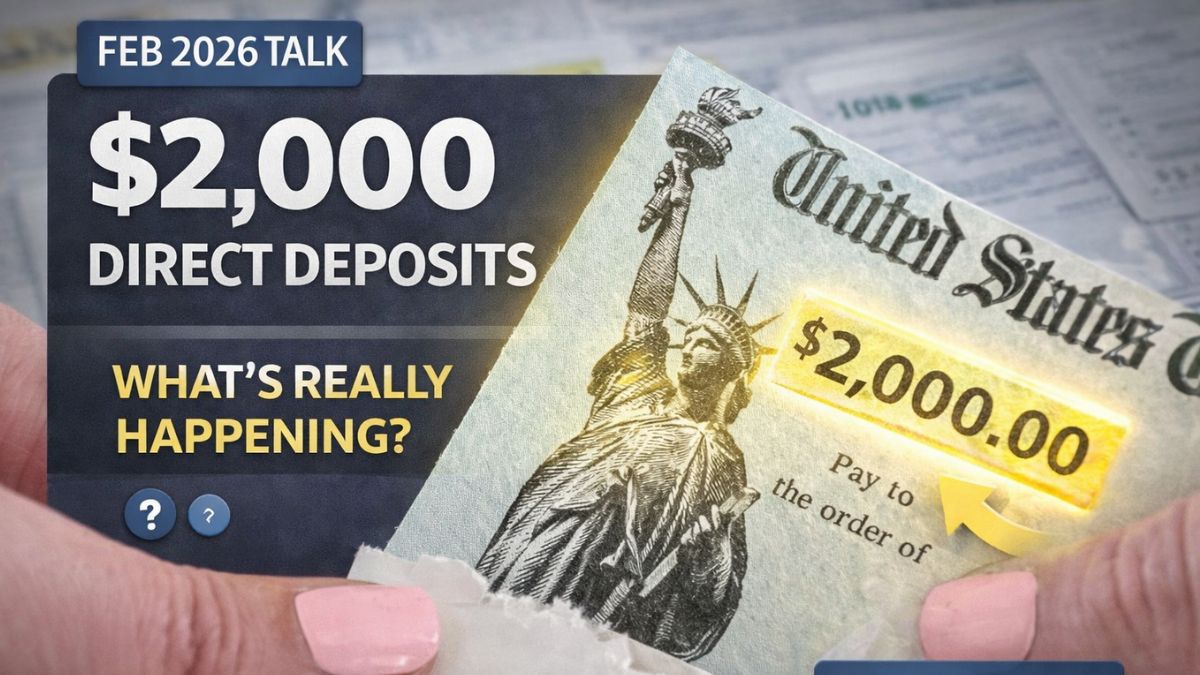
As February 2026 approaches, many people across the United States are hearing claims about a possible $2,000 direct deposit from the federal government. Social media posts, online videos, and forwarded messages are spreading quickly and creating strong expectations. Some people believe a new payment has already been approved, while others are unsure what is real and what is only rumor. Because money-related news spreads fast, it is important to separate confirmed facts from public speculation.
Right now, there is no officially approved nationwide $2,000 payment for all Americans scheduled for February 2026. The discussion mostly comes from past stimulus programs and current policy conversations about financial relief. Understanding the background helps reduce confusion and prevents disappointment.
Why People Expect Another $2,000 Federal Payment
The idea of a $2,000 payment did not appear from nowhere. In past years, during national emergencies and economic slowdowns, the government approved stimulus checks and relief deposits. Many households received large one-time payments during those periods. Those experiences created a lasting expectation that similar support might return when living costs rise again.
Also Read:
 IRS Confirms February Refund Date: What It Means for Taxpayers and When Payments May Arrive
Inflation and higher daily expenses have also added to public pressure. When people feel financial stress, any talk of government relief quickly gains attention. However, discussion and approval are not the same thing. A proposal can be talked about for months without becoming law. Until a bill is passed and officially announced, no payment is guaranteed.
Why Some Deposits May Still Be Close to $2,000
Even without a new stimulus program, some people may still receive deposits that are close to $2,000 around tax season. These payments usually come from existing systems, not from a new relief package. Tax refunds are the most common example. When someone files their tax return and qualifies for refundable credits, the total refund can sometimes reach or exceed $2,000.
Refund amounts depend on income, tax credits, dependents, and withholding during the year. For example, families who qualify for certain child-related or earned income credits may see larger refunds. This is not a bonus payment. It is simply how the tax calculation works for that household.
Also Read:
 IRS Tax Refund Deposit Schedule 2026: Check Amount & Estimated Dates for Refund Payments in the USA
In other cases, combined benefit payments may arrive close together and look like a single large deposit. When adjustments or back payments are included, the total can appear similar to a special one-time payout even though it is not.
How Benefit Programs Can Create Larger Combined Payments
Some government benefit programs adjust payment amounts from time to time. When adjustments are applied, beneficiaries may receive corrected amounts or delayed credits together. This can make one month’s deposit larger than usual.
Retirement, disability, or survivor benefits sometimes include adjustments that are paid after recalculation. Veterans’ benefits and other federal support programs can also produce combined deposits when updates are processed. These payments follow program rules and formulas. They are not surprise stimulus checks, even if the number looks similar.
Also Read:
 $2,000 Direct Deposit February 2026: Truth, Eligibility Talk, Payment Dates & Real Guidelines
Because of this, seeing a deposit near $2,000 does not automatically mean a new federal program has started. Often, it is simply the result of normal benefit processing.
What Would Happen If a New Payment Were Approved
If a new federal payment were actually approved, it would follow a clear official process. First, lawmakers would pass legislation. Then agencies would release formal guidance explaining who qualifies and when payments would be sent. After that, distribution would usually happen in phases.
People with direct deposit details already on file through tax returns or benefit programs would normally receive money first. Others might receive paper checks or prepaid debit cards later. Exact dates would be publicly announced through official government channels. Until such announcements are made, any specific February payment date should be treated as unconfirmed.

How Eligibility Is Usually Decided for Federal Payments
When federal payments are approved, they rarely go to every person without limits. Eligibility rules are normally included in the law. These rules often consider income level, tax filing status, and residency. Lower and middle income households are usually prioritized, while higher income earners may receive reduced amounts or nothing at all.
Family structure can also matter. Some programs add extra amounts for dependents, while others pay only per eligible adult. Each program has its own formula. That is why it is not safe to assume everyone would receive exactly the same amount if a program were created.
Why Keeping Personal Records Updated Is Important
Whenever payments are sent through government systems, accuracy of records plays a major role. Deposits and checks are issued using information already stored in tax and benefit databases. If someone has changed their bank account or moved to a new address, delays can happen.

Keeping tax filings current and updating banking information with the correct agencies can help avoid problems. Even when no new payment is announced, maintaining updated records is a good financial habit. It supports faster refunds and smoother benefit delivery.
The Risk of Scams During Payment Rumors
Whenever large payment stories spread, scams increase. Fraudsters take advantage of public excitement and confusion. They may send messages pretending to be from government offices and ask for personal data or banking details. Some create fake websites or social media posts that look official.
Real government agencies do not randomly message people asking for passwords, account numbers, or verification fees. Any unexpected message promising fast access to a $2,000 payment should be treated with caution. Verification should always be done through official government websites and trusted announcements.

What People Should Do While Waiting for Official Updates
The most practical step right now is to stay informed through reliable sources and avoid depending on viral claims. Filing tax returns correctly, reviewing benefit statements, and keeping records updated are useful actions regardless of whether new payments are approved.
It also helps to understand that not every large deposit is a stimulus payment. Many deposits come from refunds, credits, or benefit adjustments. Checking the payment description and source can prevent misunderstandings.
Final Reality Check for February 2026
At this time, there is no confirmed universal $2,000 direct deposit scheduled for February 2026. The topic is being widely discussed, but discussion is not the same as approval. Some people may still receive deposits near that amount through refunds or program benefits, but those payments follow existing rules, not a new nationwide relief plan.

Careful verification, patience, and attention to official announcements remain the safest approach.
Disclaimer
This article is for informational purposes only and does not provide legal, tax, or financial advice. Payment programs, eligibility rules, and timelines can change based on government decisions. Readers should rely on official government announcements and consult a qualified professional for advice related to their personal situation.